
Budget 2026: What Healey's Budget Means for Property
Stamp duty holds, capital gains tax stays put and first time buyers get a new scheme. But landlords face a second rise in tax on rental income. Here is what Healey's first Budget means for your property, and how to plan ahead with confidence.
The Budget at a glance
Chancellor John Healey delivered his first Budget on Wednesday 28 October, and for most people buying, selling or owning a home in London, the picture is one of steadiness. Stamp duty is unchanged, capital gains tax has not gone up, and the threshold for the new council tax surcharge on homes worth £2 million or more stays where it was.
The headline change for property is aimed at landlords who own in their own name, with a further rise in tax on rental income from April 2027. There is also welcome news for first time buyers through a new Your First Home scheme.
Below, we break down what was announced and what it could mean for you.
For landlords: a further rise in tax on rental income
If you let property in your own name, tax on your rental profits will rise by a further two percentage points from April 2027. This comes on top of the increase announced in last year's Budget, which was already due to take effect on 6 April 2027.
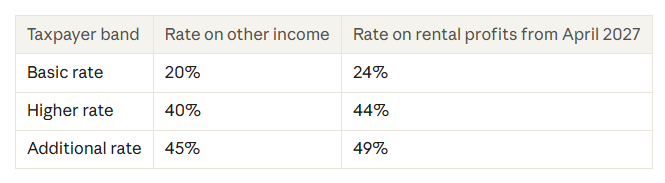
Last year's Budget had set these rates at 22%, 42% and 47%, and today's announcement adds two points to each. Relief on mortgage interest will stay aligned with the new 24% basic rate. Tax on salaries and dividends is not changing.
A few points are worth keeping in mind:
- The change applies to property held personally. Landlords who hold property through a limited company pay corporation tax instead, so this rise does not apply to them directly.
- There is still time to plan. The new rates do not start until April 2027, giving you the rest of this tax year and next to review your position.
- Rental demand across Central London remains strong, and well let, well managed homes continue to perform.
Every landlord's situation is different, so we always recommend speaking with an accountant or tax adviser before making any decisions.
What stayed the same
After months of speculation, much of the property tax picture is unchanged, which brings welcome certainty for buyers and sellers.
- Stamp duty: no changes to rates or thresholds. The 5% surcharge on additional homes also stays as it is.
- Capital gains tax: no increase. For landlords weighing up whether to keep or sell a property, this keeps the cost of selling where it was.
- High value council tax surcharge: the £2 million threshold announced last year is unchanged, with the surcharge still due from April 2028.
For sellers in particular, this means you can plan a sale without new costs appearing along the way.
For buyers: a new route onto the ladder
The government confirmed a new Your First Home scheme to replace Help to Buy. Zoopla estimates it will cost around £1.5 billion a year and could help up to 30,000 first time buyers annually. Full details are still to come, and we will share them as soon as they are published.
Plans are also in motion to replace the Lifetime ISA with a new First Time Buyer ISA from 2028, while the annual ISA allowance stays at £20,000.
More first time buyers in the market is good news for anyone selling a starter home or a one or two bedroom flat, as it should widen the pool of ready buyers.
Mortgages and the wider economy
Alongside the Budget, the Office for Budget Responsibility forecast growth of 1.2% this year and 1% in 2027, before picking up to around 1.6% to 1.8% a year from 2028. Inflation rose to 3.5% in September, so interest rates are unlikely to fall quickly.
The Chancellor also introduced an extra 3% tax surcharge on banks. Some lenders have suggested this could feed through to mortgage pricing over time, so if you are thinking of remortgaging or buying, it is worth speaking to a broker sooner rather than later.
On the household side, the Budget removes VAT from domestic electricity bills, moves the gas standing charge into unit prices from 2027 and extends the fuel duty freeze to July. Smaller businesses will also see relief on business rates. Together these should ease the cost of living for many tenants and owners.
What this means for you
This was a steady Budget for the London property market. Buyers and sellers have the certainty of unchanged stamp duty and capital gains tax, and first time buyers have new support on the way.
For landlords, the rise in tax on rental income is a real change, but it does not start until April 2027 and there is time to plan. Good tenants are still searching for quality homes across Soho, Covent Garden, Bloomsbury, Marylebone, Hyde Park and Dulwich, and keeping your property let, compliant and well looked after remains the best way to protect your return.
If you would like to talk through your options, whether that is reviewing your rent, our management services or the current value of your property, our team is always happy to help.
Greater London Properties
Your Home, Your Story
Our Values ✨
Accountable • Ambitious • Approachable • Authentic
☎️ 0207 113 1066 | ✉️ info@glp.co.uk
📸 @greaterlondonproperties | @glpdulwich