Awaab's Law and Your Rental: Have Your Say by 18 December
Awaab's Law, which sets fixed deadlines for landlords to deal with damp, mould and serious hazards, is on its way to private rented homes. The government's consultation opened on 9 October. Here's what's proposed, what it could mean for you and how to have your say.
Awaab's Law is named after Awaab Ishak, the two year old who died in 2020 after long exposure to mould in his family's social housing flat in Rochdale. It sets legal deadlines for landlords to investigate and fix serious hazards, and it has applied to social housing since autumn 2025.
This morning on the 9 October 2026 the government opened a consultation on bringing the same protections to private rented homes, using powers already in the Renters' Rights Act. Nothing changes for landlords yet. This is the moment to understand what is proposed and to have your say before the details are settled.
What is being proposed
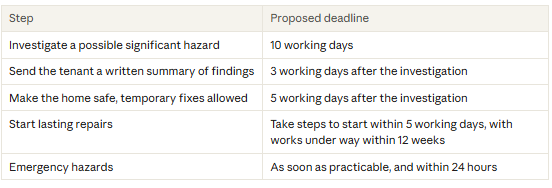
The starting point is the timetable social landlords already follow. These are the proposals, and the consultation asks whether each one should be shorter or longer.
Which hazards? The proposal covers all 21 hazards in the updated HHSRS except crowding and space, so this goes well beyond damp and mould. It would be triggered by any significant or emergency hazard, not just Category 1.
Who it covers. Private tenancies, plus homes occupied under licence such as supported housing, temporary accommodation and housing for care leavers.
Tenant circumstances. Landlords may be asked to consider who actually lives in the home, such as young children or someone with a health condition, when judging how serious a hazard is.
How it would be enforced. Awaab's Law would become a term of every tenancy, so tenants could take a landlord to court for missing a deadline. Complaints would also go to the new Private Rented Sector Landlord Ombudsman, which landlords are expected to join in 2028. Councils keep their existing HHSRS powers, including the £7,000 penalty for Category 1 hazards.
Still open for debate. Whether landlords must provide alternative accommodation when repairs overrun, how leasehold flats are handled when the freeholder is responsible for the fix, and who counts as competent to investigate. The government recognises that many private landlords own a single property, and is asking how to keep the rules fair and workable.
When could it happen?
There is no start date for private rentals yet, as that depends on what the consultation finds. In social housing, Awaab's Law has been rolled out in stages: damp, mould and emergencies first, then excess cold, falls and electrical hazards from 30 November 2026, subject to Parliament, then the remaining hazards in 2027.
The government says around one in ten private rented homes currently has a Category 1 hazard, and that the wider changes could bring more than five million extra households under these protections.
Have your say by 18 December
The consultation closes at 11:59pm on 18 December 2026. You can answer only the questions that matter to you, and most are aimed at landlords and agents, so your experience counts. Respond online through the consultation page on GOV.UK, or email awaabslawconsultation@communities.gov.uk.
How to get ahead now
The landlords who will notice Awaab's Law least are the ones who already respond quickly and keep good records. A few habits put you well ahead.
1. Make reporting easy. Give tenants one clear way to report problems, and log the date and time each report arrives.
2. Act quickly on damp and mould. Visit promptly, find the cause and deal with it rather than just treating the surface.
3. Put findings in writing. A short note to your tenant after each visit, setting out what you found and what happens next, is exactly what the proposals expect.
4. Know your 21 hazards. Awaab's Law uses the same list as the updated HHSRS, so a property check against it now covers both.
5. Line up trusted contractors. Fixed deadlines are far easier to meet with reliable trades ready to go.
6. Check your leasehold arrangements. If you let a flat, know who to contact at the freeholder or managing agent for building issues.
7. Keep a record of everything. Dated photos, reports, invoices and messages show a landlord who takes safety seriously.
How we can help
At Greater London Properties we have been looking after homes across Central London since 2003. Our Property Management team already works to clear timescales on repairs, keeps tenants updated in writing and records every step along the way, which is the very approach Awaab's Law is built on.
The good news is that a well cared for home is also a home that lets quickly and keeps great tenants for longer. If you would like a friendly chat about your property, or help preparing for these changes, we would love to hear from you.
Best Wishes
Megan Cutforth
Greater London Properties Your Home, Your Story
Our Values ✨ Accountable • Ambitious • Approachable • Authentic
☎️ 0207 113 1066 | ✉️ info@glp.co.uk 📸 @greaterlondonproperties | @glpdulwich