?share=copy&fl=sv&fe=ci
NEW GOVERNMENT ANNOUNCEMENT on the Landlord Database, known as 'Register Your Rental Property'
The government have made an important announcement this morning with regard to the landlord database roll out, they have now named this 'Register Your Rental Property'. The cost per property has been revealed, and there will be a regional deadline roll out starting in December 2026, read more to find out the details.
As per the original goverment road map which was released for The Renters Rights Act, the landlord database was due to be implemented from late 2026.
The government have now announced further details this morning and first registrations will officially begin on the 15th December 2026. This is a significant change and understanding your region's timeline is crucial for compliance. Here's what you need to know.
What is landlord registration and why is it happening?
The 'Register your rental property' service is part of the Renters' Rights Act 2025, and it's designed to improve compliance and accountability in the private rental sector. The government is introducing this requirement to help local councils identify and tackle rogue landlords, while giving tenants access to information about whether a property owner is complying with key legal requirements.
The bottom line: if you let out an assured or regulated tenancy, you must register. The only landlords who don't need to register are those with supported exempt accommodation as set out in the Supported Housing (Regulatory Oversight) Act 2023.
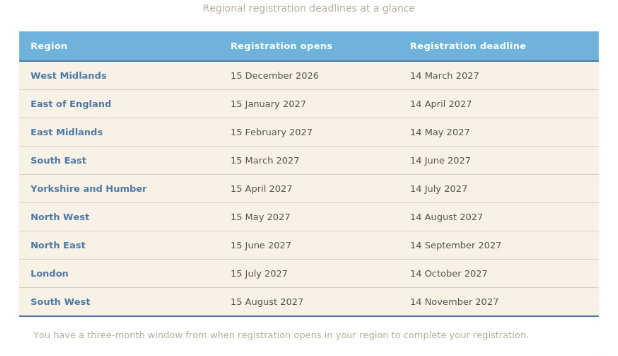
When do you need to register? Regional deadlines explained
The government is rolling out the service region by region, starting December 15th 2026. This staggered approach prevents the system from being overwhelmed.
Here's the key point: your registration deadline depends on where your property is located, not where you live. So if you own a property in London but live elsewhere, you'll need to meet the London deadline.
What will the registration fee cost?
There's an annual £65 fee per property. If you own multiple properties, you'll need to pay the fee for each one, and you'll need to renew each year. The government has set this fee to balance fairness with the cost of running the service and funding council enforcement activity.
What information do you need to provide?
The registration process will ask for a range of information about you as a landlord and about your property. Be prepared to provide:
- About you: your name, date of birth, residential address (for individual landlords), contact details, and proof of authority if you're registering on behalf of someone else.
- About your property: full address, number of bedrooms, number of occupants, whether it's furnished or unfurnished, ownership type, and details of any letting agents or property managers involved.
- About the rent: the amount charged and how frequently it's paid, plus whether utilities are included.
- Health and safety certificates: gas safety records, electrical installation condition reports (or certificates), and energy performance certificates. These are crucial, so make sure your paperwork is current.
The government has published a full checklist on their website of everything you'll need. Now is a good time to start gathering these documents so you're not scrambling when your registration deadline arrives.
Can we (your letting agent) help?
Yes, however they have made it clear that you as the landlord are responsible for starting and completing the registration process yourself. However, your letting agent or property manager can support you by uploading certain information on your behalf, as long as they've agreed this with you. Guidance for us letting agents will be published before the service launches. The key responsibility remains yours but we will ensure to support you every step of the way.
What happens if you don't register?
If you fail to register before the deadline for your region, you risk being fined. Local councils will have the power to enforce after the three-month registration window closes. This isn't something to ignore.
What this means for landlords (and tenants)
If you're a responsible landlord, registration is a chance to demonstrate that you're compliant with the law. You'll have a formal record that you meet health and safety standards and are collecting rent legally.
For tenants, this registration will eventually give them access to information about whether a landlord is operating within the law. This helps the sector move towards a higher standard overall.
Once registered, how will others know this is done?
This guidance has not yet been released, however it has been mentioned that letting agents will most likely not be able to list your property following the registration deadline for your region if we do not have a Unique Property Reference Number (UPRN) to demonstrate your property is registered on the database.
The action to take now
Don't wait until your registration deadline is looming. Start gathering your documents now. Check your gas safety records, electrical inspection reports, and energy performance certificates. Make sure they're up to date and that you know where they are.
Keep an eye on your local deadline so you're not caught off guard. The government will be running a communications campaign to raise awareness, but it's better to be prepared than to rush.
Registration is a new reality in the private rental sector. Getting organised now means you'll sail through the process when it's time. We're here to assist with any questions you may have and if you are a landlord of ours, we will aim to support you through the process as much as possible. Please don't hesitate to reach out to me directly.
Best Wishes
Megan Cutforth
Lettings Director
Greater London Properties
Your Home, Your Story
Our Values ✨
Accountable • Ambitious • Approachable • Authentic
☎️ 0207 113 1066 | ✉️ megan@glp.co.uk
📸 @greaterlondonproperties | @glpdulwich